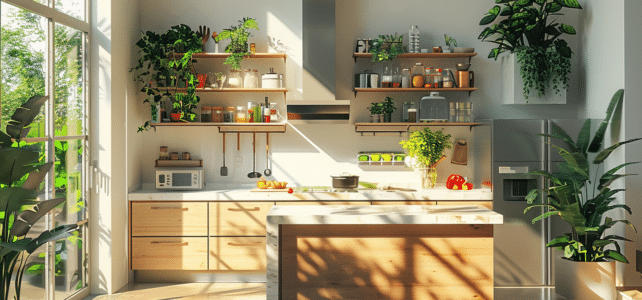
In the world of cooking, where every square inch counts, space optimization becomes an essential quest for both amateur cooks and seasoned chefs. Creating a functional and harmonious environment relies on the meticulous selection of key elements. From clever storage solutions to compact appliances, and smart design tips, homeowners are constantly on the lookout for ideas to maximize their kitchen space. Discovering the essentials of an efficient layout can transform even the smallest kitchens into unparalleled culinary creation spaces.
Space Optimization and Functionality: The Keys to a Practical Kitchen
At the heart of the home, the kitchen requires thoughtful organization to become the central hub of domestic life. Measure the available space; the workspace must be optimized to ensure fluidity and efficiency. Implementing the activity triangle, a proven layout concept, ensures easy circulation between cooking, washing, and storage areas. This organizational model reduces unnecessary movements and maximizes the use of every available inch.
The implementation of a multifunction sink fits into this maximization logic. With its ingenious design, it offers extended functionalities ranging from classic washing to food preparation, even integrated composting. The sink transforms into a hub of activities, reducing the need for additional surfaces and contributing to a practical and all-in-one kitchen.
Light plays a significant role in the functionality of a kitchen. A kitchen requires appropriate lighting, which not only highlights the aesthetics of chosen materials like ceramic, dekton, or laminate but also facilitates daily tasks. A combination of general, task, and accent lighting allows for optimal working conditions, regardless of the time of day or season.
Consider the efficient layout of storage space. Solutions such as sliding doors, foldable furniture, or rolling drawers are all options to optimize storage space. These clever arrangements help maintain an organized and accessible kitchen, a prerequisite for a serene and productive cooking practice. A strategic approach to the internal organization of cabinets and drawers will make it easy to find utensils, spices, and other culinary essentials.
Choosing Equipment and Storage Tips for a Custom Kitchen
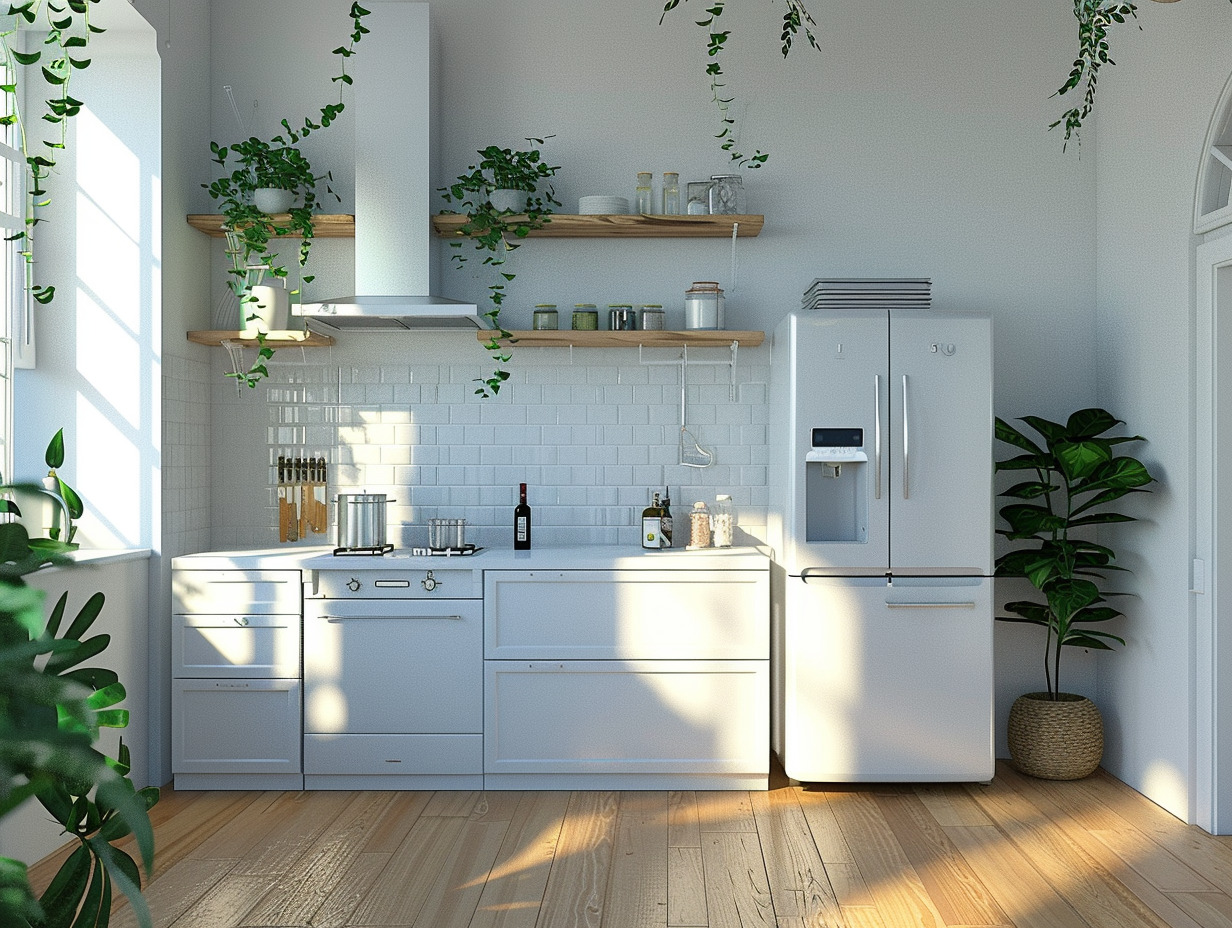
The layout of your kitchen inevitably involves a fundamental step: taking measurements. This is crucial for planning the space so that each element finds its place with coherence and aesthetics. Kitchen projects like Cocondid, LaKazaJo, Bendesign, or Ludidi36 illustrate the diversity of possible approaches, each responding to a Scandinavian, industrial, chic country, or modern style and a specific functionality. The use of 2D and 3D plans allows for visualizing the space and simulating the layout, whether it is in a straight line, parallel, L-shaped, U-shaped, or featuring a central island.
Storage, essential for the organization of a custom kitchen, can be greatly improved by optimization solutions such as sliding doors, foldable furniture, or rolling drawers. These tips allow for maximizing space while maintaining the chosen aesthetic. For appliances, built-in appliances prove to be a top option for those looking to optimize space without sacrificing functionality.
Materials such as ceramic, dekton, or laminate are used for their durability and ability to fit into various kitchen styles. Layout advice, such as that provided by Kozikaza or architectural agencies like Nicolas Sallavuard’s, offers inspiration and expertise to create a kitchen measured to perfection. The wise choice of materials and equipment, combined with clever storage tips, leads to a custom kitchen where every element harmonizes for an optimized culinary experience.