
The tax horsepower of a Peugeot 308 varies significantly depending on the engine type and the homologation date. This is not just an administrative detail: the difference between 4 and 10 tax horsepower within the same generation affects the cost of the registration document, the insurance amount, and the resale value. Here, we detail the technical mechanisms that explain these discrepancies and their real financial consequences.
Tax horsepower formula post-2020 and its effects on the 308
Since 2020, the formula for calculating tax horsepower no longer takes CO₂ emissions into account. Only the power in kW is now considered:
1.34 + (1.8 × (kW/100)²) + (3.87 × (kW/100))
This change has a direct effect on the recent versions of the 308. Before 2020, two engines with the same actual power but different emission levels could show distinct tax horsepower. This is no longer the case: only the mechanical power counts.
Specifically, to understand the tax horsepower of the Peugeot 308, one must first identify the power in kW in box P.2 of the registration document, then apply this formula. A 308 PureTech 130 hp (approximately 96 kW) results in 7 tax horsepower. A BlueHDi 130 hp, with nearly identical kW power, also results in the same outcome, whereas the old formula sometimes separated them by one tax horsepower due to the difference in emissions.
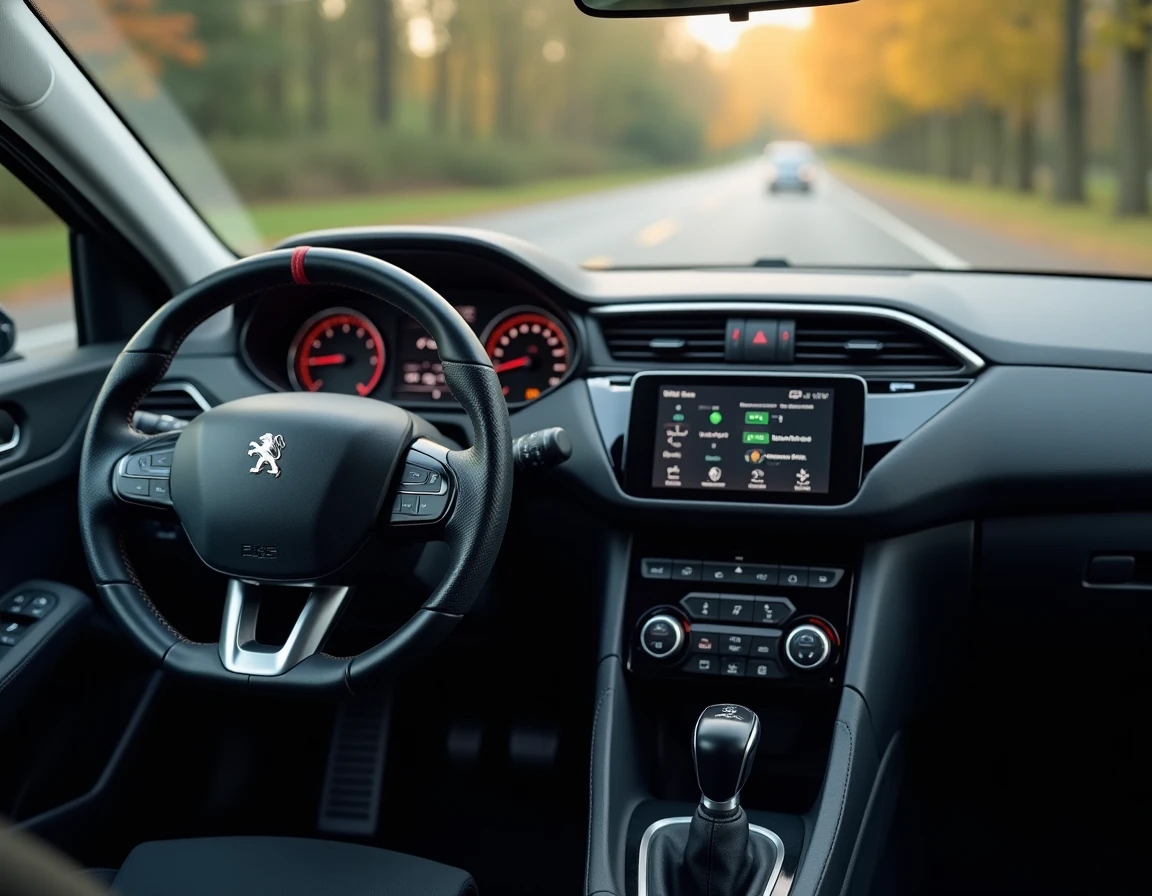
Difference in tax horsepower between thermal, hybrid, and electric 308s
The current 308 range perfectly illustrates the distortions that the formula creates between technologies.
- The e-308 (100% electric, 156 hp) are all classified at 4 tax horsepower, regardless of the trim level. The power in kW of their electric motor remains moderate compared to the perceived power.
- The 308 plug-in hybrids with 180 hp rise to 8 tax horsepower, as the formula applies to the combined power of the powertrain, not just the thermal unit.
- The plug-in hybrid versions with 225 hp reach 10 tax horsepower, more than double that of the electric version, for daily use often comparable in the city.
We regularly observe that buyers underestimate this gap. Moving from 4 to 10 tax horsepower multiplies the regional tax amount by 2.5 at registration and significantly increases the insurance premium.
The case of used 308 T9
In the previous generation (T9), the situation is different. The e-HDi 115 and BlueHDi 120 engines fluctuate between 5 and 6 tax horsepower depending on the exact variant and type of gearbox. Owners of 308 T9 e-HDi 115 have noted a classification of 6 tax horsepower instead of the expected 5, related to differences in transmission ratios or homologated variants. The figure recorded on the certificate of conformity is authoritative, not the one stated in the sales brochure.
Real impact on the cost of the registration document for the 308
The price of the registration document depends on the number of tax horsepower multiplied by the unit rate set by each region. This rate varies significantly from one department to another.
For a 308 electric at 4 tax horsepower, the regional tax remains contained. For a plug-in hybrid at 10 tax horsepower, the amount can easily exceed double or even triple depending on the region. The difference in registration cost between an e-308 and a 308 hybrid 225 hp often exceeds several hundred euros.
Additionally, there is the ecological penalty, which only applies to thermal and non-rechargeable hybrid versions beyond a certain emissions threshold. The e-308s are completely exempt from this, and some regions also grant partial or total exemptions from the regional tax for electric vehicles.
Car insurance and tax horsepower of the 308
Insurers incorporate tax horsepower into their pricing grid, but not in a linear manner. The threshold of 6 tax horsepower is the point beyond which the premium increases more significantly with most companies. A 308 PureTech 130 at 7 tax horsepower already incurs a surcharge compared to a PureTech 110 at 6 tax horsepower, even if the difference in actual power remains modest.
For young drivers, the difference widens even more. We recommend checking the insurance quote before finalizing the purchase, especially for plug-in hybrid versions that combine high tax horsepower and a higher purchase price.

Check and anticipate tax horsepower before purchasing a 308
The tax horsepower is listed in box P.6 of the registration document, but it is also indicated on the European Certificate of Conformity (COC) of the new vehicle. In case of doubt about a used vehicle, this document is decisive.
Three points to systematically check:
- The correspondence between the announced kW power (box P.2) and the tax horsepower (box P.6). Applying the formula can help detect any administrative errors.
- The exact version of the vehicle. Within the same commercial designation (for example, “308 BlueHDi 130”), several variants may exist with different tax horsepower.
- The intended registration department. Changing regions can alter the total cost by several tens of euros per tax horsepower.
In the used market, tax horsepower also influences the valuation. A 308 with 5 tax horsepower sells more easily than a version with 8 or 10 tax horsepower, as the annual holding cost (registration document upon ownership change, insurance) weighs in the purchasing decision. Keeping this parameter in mind when choosing the engine type avoids recurring additional costs throughout the vehicle’s ownership.