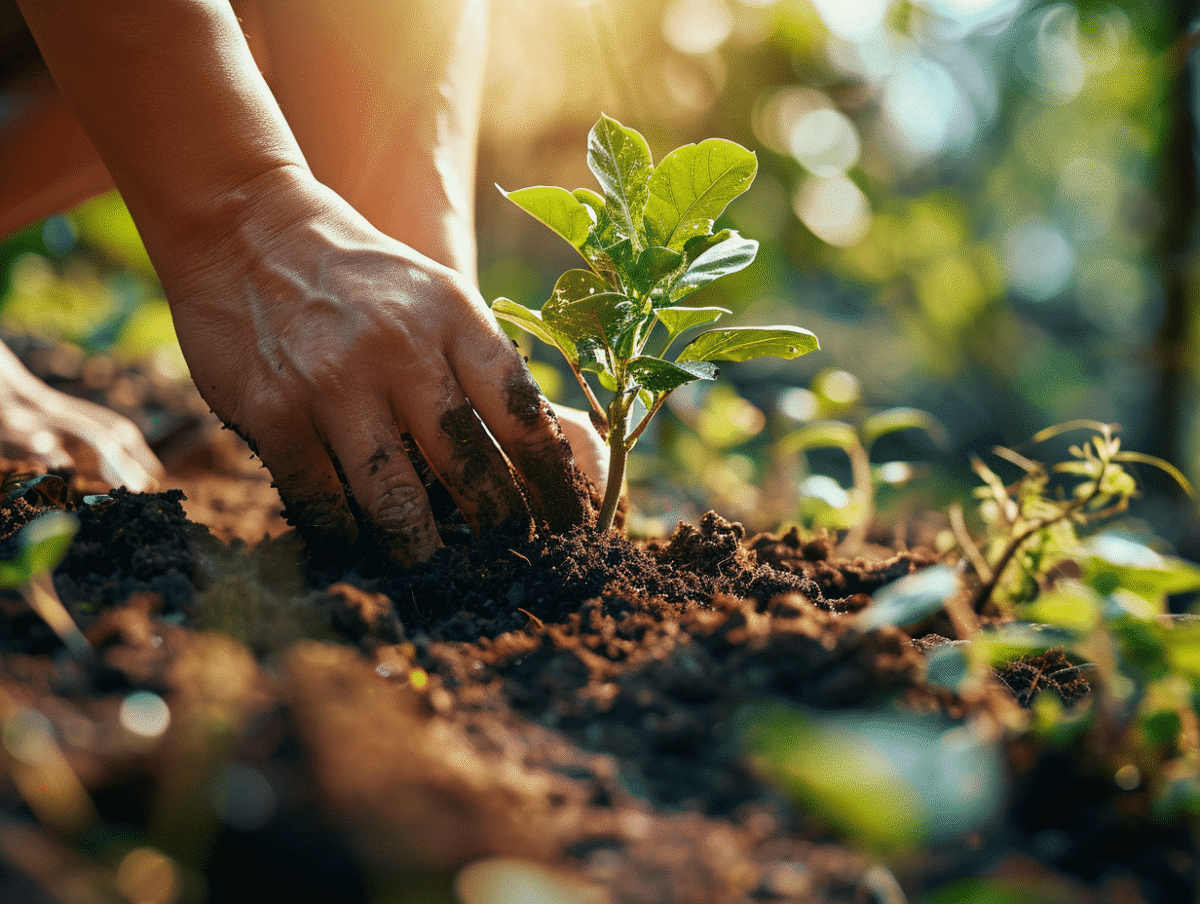
The quality of the soil in your garden is a determining factor for the health and growth of your plants. Nutrient-rich, well-aerated soil with good water retention capacity promotes root development and ensures balanced nourishment. Many gardeners face poor, compacted, or poorly drained soils, which harm the vitality of plants. Fortunately, there are effective methods to diagnose the state of the soil and suitable improvement strategies, such as adding organic matter, mulching, or crop rotation to preserve and optimize this vital environment.
The Fundamentals of Garden Soil Quality
Soil quality is not decreed; it is built patiently and with discernment. At the heart of this approach, organic matter plays a key role. It is the fuel for microbial life, which nourishes and structures the soil. Conseil au Jardin: Regularly incorporate compost or manure into your soil to maintain and increase its fertility. The micro-fauna, consisting of bacteria, fungi, earthworms, and other organisms, works in symbiosis with plant roots, promoting the absorption of essential nutrients.
The nature of the soil, whether acidic or basic, influences the availability of these nutrients. A balanced pH is therefore fundamental for optimal growth. Vegetables, which are nutrient-hungry, require particular attention in this regard. If your soil is too acidic, amendments like lime may be necessary to restore balance. Conversely, some plant residues can help acidify overly alkaline soil.
The texture of the soil, whether clay or sandy, determines its ability to retain water and allow root aeration. Heavy, compact clay soil can be improved by adding sand and organic matter, thus facilitating drainage and rooting. On the other hand, overly sandy soil will benefit from the addition of clay and compost to increase its water retention capacity. Each type of soil, with its particularities, can be adjusted to become a fertile terroir, conducive to plant life.
Practical Strategies for Soil Improvement
The addition of organic matter: A pillar of fertility. Compost, a true concentrate of life, continuously nourishes the soil. Its benefits are not limited to the supply of nutrients from plant waste: it also stimulates the biological activity essential for any productive land. Also consider manure, which fertilizes quickly and effectively, especially for new plots awaiting enrichment.
The use of amendments: To optimize soil quality. Wood ash, rich in potash, proves to be an ally for flowering and fruit growth. It significantly enriches the soil. As for clay, when incorporated into overly sandy soil, it increases its ability to retain water, a key advantage in drought-prone areas or during periods of low precipitation.
The integration of BRF (Fragmented Branch Wood): For stable humus and preserved fertility. This material, derived from shredding branches, decomposes slowly, releasing nutrients over the long term and improving soil structure. It prevents erosion and retains moisture, two crucial aspects for soils exposed to the elements.
The choice of suitable crops: Such as green manures that protect and regenerate. Legumes, for example, fix atmospheric nitrogen and bring it to the soil, improving its fertility for subsequent crops. Fallen leaves, used as mulch, cover and enrich the soil, protecting it from the elements and contributing to its microbial life. Mycorrhizae, these symbiotic fungi, promote soil life by creating a support network for nutrient absorption by plants.