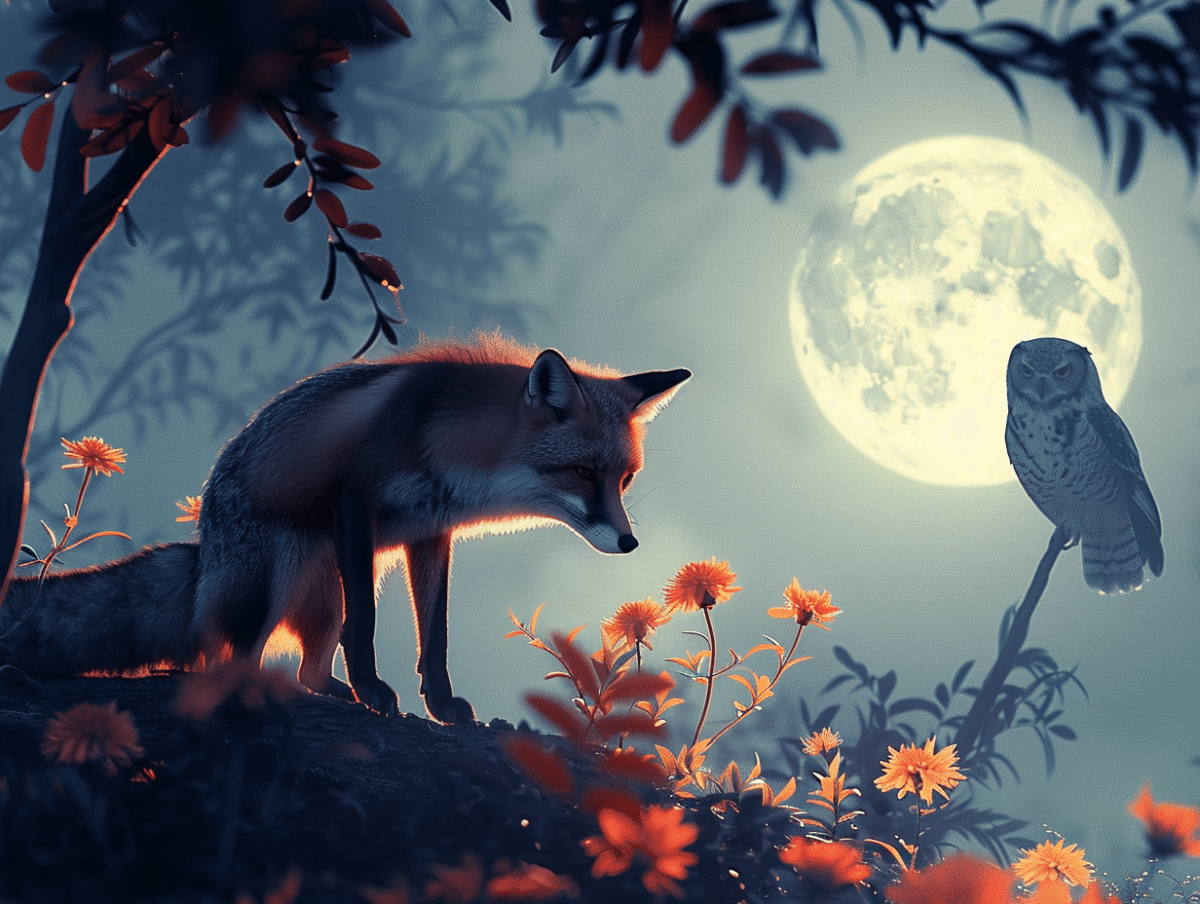
The nighttime darkness transforms your garden into a sanctuary for a diverse wildlife. At night, as the human world slows down, a whole different activity awakens. Unseen creatures venture into the shadows, but how can you identify these mysterious visitors without seeing them? It’s a captivating challenge for nature lovers. Equipping yourself with a few tools and knowing certain methods can reveal the identity of these ephemeral guests. From footprints left on the ground to distinctive calls and songs, each clue helps to unveil the secrets of these night dwellers.
Techniques to Identify the Nocturnal Visitors in Your Garden
In the quest for these silent guardians of our nights, observing tracks and signs becomes a preferred method. Vincent Lecomte, an associate professor of natural sciences at the University of Burgundy, emphasizes the wealth of information that a simple nighttime walk can provide. Equip yourself with a flashlight to spot the footprints left by mammal paws or bat wings, which stand out on the soft ground of the garden. The hedgehog droppings, with their characteristic appearance, can also betray the presence of this benevolent insectivore.
The plants themselves provide invaluable clues. Some, like evening primrose or bladder campion, bloom at dusk, attracting nocturnal pollinators such as sphinx moths and night butterflies with their nectar. The moonflower, or Ipomoea alba, opens from dusk until dawn, offering a fascinating and ephemeral spectacle conducive to observing nocturnal wildlife. The stonecrop, in its discretion, continues photosynthesis at night and can thus serve as an indicator of nocturnal activities through the nibbling marks left on its leaves.
Don’t overlook the contribution of hearing in this exploration. The cries of the red fox or the call of a hunting bat are sound signatures that, once recognized, reveal the presence of these animals without needing to see them. Experts like Vincent Lecomte explain that the breathing of plants and the rustling of leaves can also unveil the secret passage of a common cockchafer or the brushing of a hedgehog searching for insects. Take the time to listen, as each nocturnal sound is a potential clue to the hidden life of your garden.

The Signs Left by Nocturnal Wildlife and How to Interpret Them
Analyzing holes and disturbances in the soil allows for the detection of visitors such as the hedgehog, which digs through the ground in search of insects. These burrows, often accompanied by droppings, are characteristic of its passage. The turned earth and small mounds indicate the activity of burrowing animals, an activity that intensifies at nightfall.
The flowers also provide valuable information. The evening primrose, by simply opening its flowers at night, attracts specific pollinators for this time slot, such as certain sphinx moths. The bladder campion, on the other hand, blooms late in the evening and indicates the presence of night butterflies, fond of its nectar. The Ipomoea alba, or moonflower, through its nighttime opening, becomes a theater of interaction between the plant and its nocturnal visitors, often invisible during the day.
As for the leaves, they bear the scars of nighttime meals. The common cockchafer, an insect from the Scarabaeidae family, attacks the leaves of trees, leaving behind irregular edges and clean perforations. The stonecrop, this decorative succulent plant, is often nibbled by nocturnal wildlife, its fleshy leaves serving as a source of water and nutrients for many animals.
The scattered seeds at the base of bird feeders or near food storage areas often betray the presence of rats or other rodents. Their passage also leaves characteristic marks such as cleared paths in the vegetation or nearby burrows. The interactions between these animals and the plant environment of your garden compose a mosaic of clues that, once interpreted, reveal the identity of the nocturnal residents of your green space.