The fashion market operates on rapid seasonal cycles, with overlapping spring-summer and autumn-winter collections in store windows. This rhythm encourages the renewal of one’s wardrobe several times a year.
Recent data from Lyst and Vogue Business point in another direction: a clear rise in searches for premium basics (cashmere sweaters, poplin shirts, classic loafers) at the expense of logoed pieces. The question is no longer about following every micro-trend, but about creating a wardrobe that stands the test of time.
Seasonless wardrobe: the principle of pillar pieces
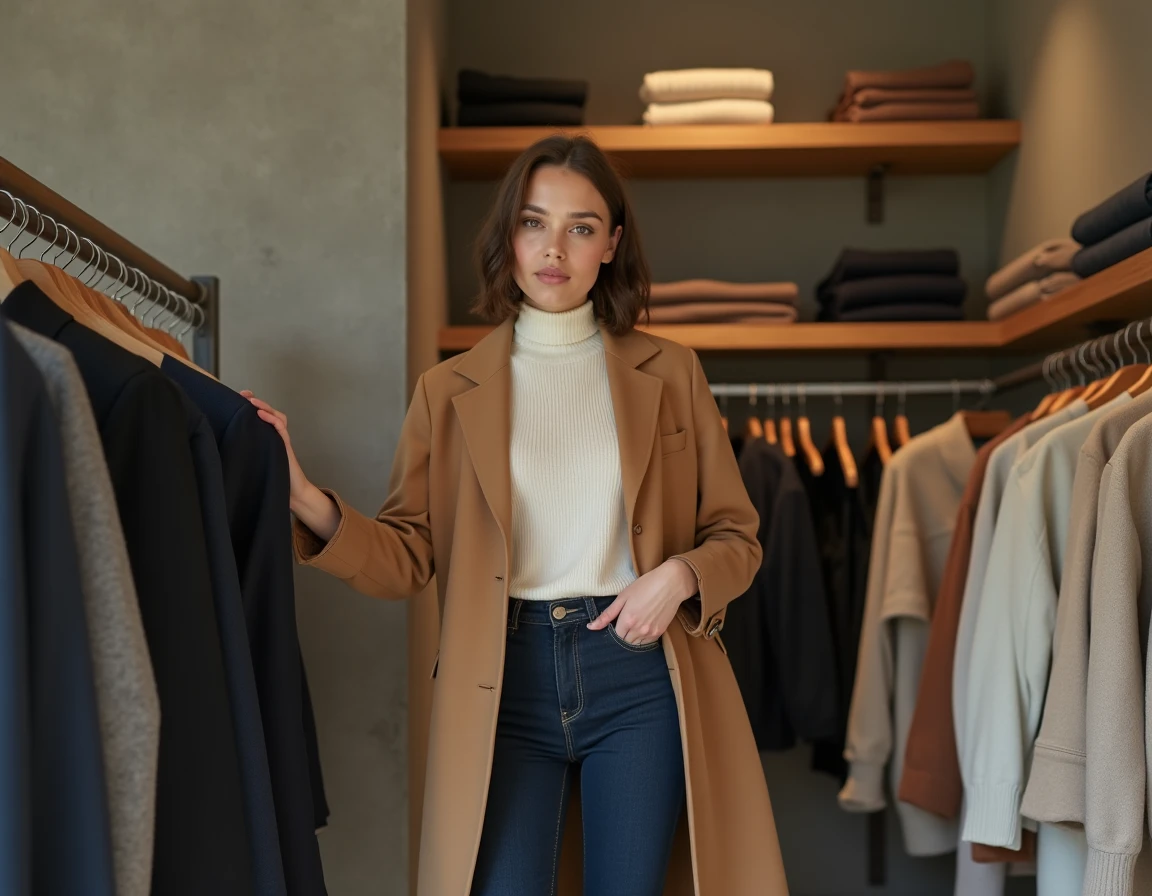
Building a wardrobe that works 365 days a year is based on a simple logic: identifying clothing that transcends the seasons without losing its relevance. A well-cut pair of jeans, a structured blazer, a quality trench coat, and a dense knit sweater form a foundation upon which everything else is built.
The seasonless approach does not mean wearing the same outfit in January and July. It involves investing in a few pillar pieces that can be worn nine months out of twelve, then adjusting with lighter or warmer elements according to the climate. A lightweight wool blazer transitions from autumn to spring with ease. A thick cotton pant works from early autumn to late spring.
This reasoning aligns with the quiet luxury trend observed since 2024. Wardrobes are becoming more minimalist yet higher quality: less volume, more longevity. To keep up with fashion trends on onlyinternet.net, this approach of durable pieces rather than accumulating new items is gaining ground each season.
Quiet luxury and premium basics: why sustainable style dominates fashion trends
The quiet luxury movement is not just a passing fashion trend. Between 2024 and 2025, sales of premium basics increased at the expense of visibly logoed pieces. Cashmere, poplin, and understated leather are replacing flashy prints in consumer search queries.
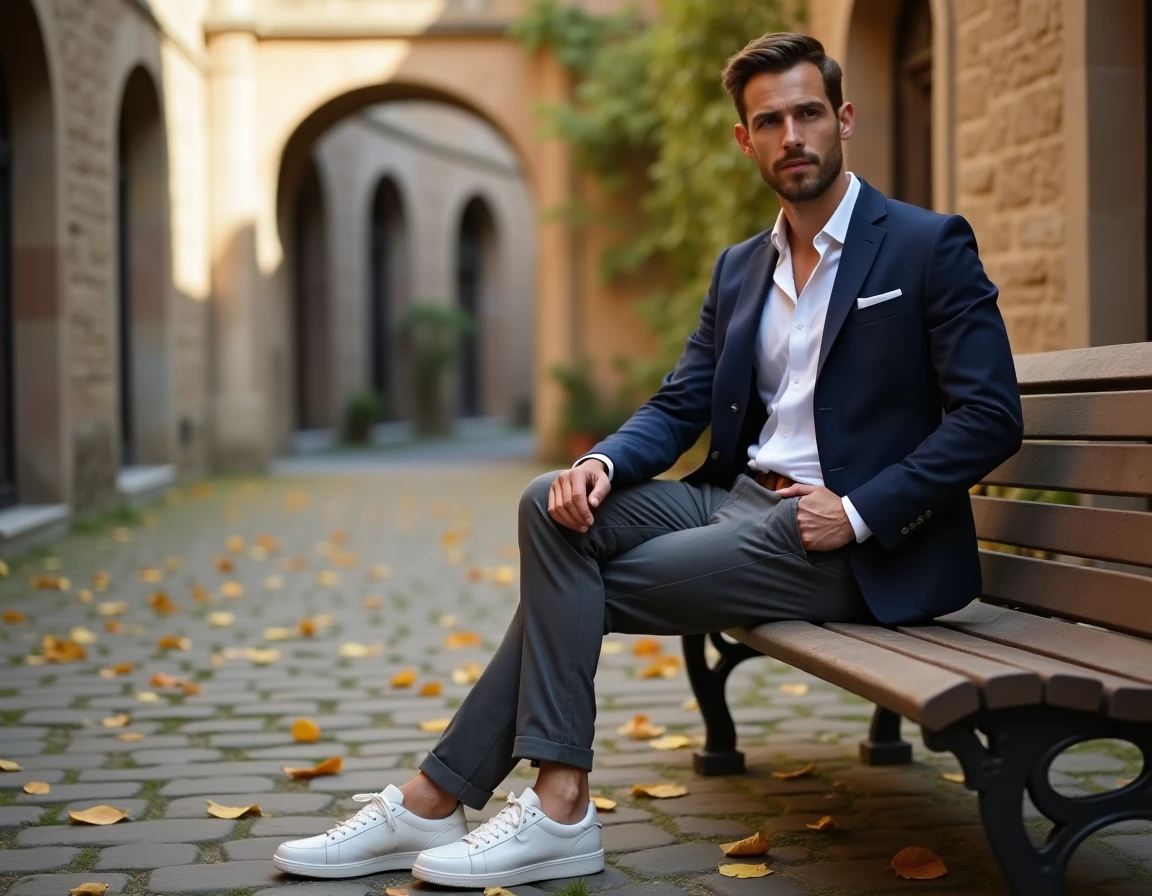
This shift reflects a change in the relationship with style. Wearing a solid cashmere sweater with raw denim and classic loafers creates a more assertive effect than an outfit covered in monograms. The garment speaks through its cut and material, not by its displayed brand.
Field reports diverge on one point: is quiet luxury still accessible, or does it push towards higher price ranges? The answer depends on the criteria used. A cashmere sweater costs more upfront than a synthetic sweater, but its lifespan is incomparable. The cost per wear of a quality basic is often lower than that of a cheap piece replaced each season.
Materials to prioritize for an all-year wardrobe
- Thick cotton (oxford, twill): it structures shirts and pants, can be worn from spring to autumn, and washes without special care
- Fine merino wool: thermoregulating, it works as a lightweight sweater in spring and as a mid-layer in winter
- Mixed linen: less wrinkly than pure linen, it lightens summer outfits while maintaining a proper fit for transitional seasons
- Smooth, understated leather: in belts, shoes, or bags, it ages well and adapts to all styles
Seasonal micro-adjustments: adapting your style without repurchasing everything
A seasonless wardrobe does not operate in a closed circuit. Each season calls for adjustments, but these can remain minimal. In spring, swapping a thick sweater for an open shirt over a t-shirt is enough to change the silhouette. In autumn, adding a wool scarf and switching to ankle boots alters the look without touching the rest.
Two or three pieces per season are enough to refresh a well-constructed wardrobe. A linen short for summer, a beanie and gloves for winter, a lightweight jacket for transitional seasons. The rest of the work is about layering and combining.
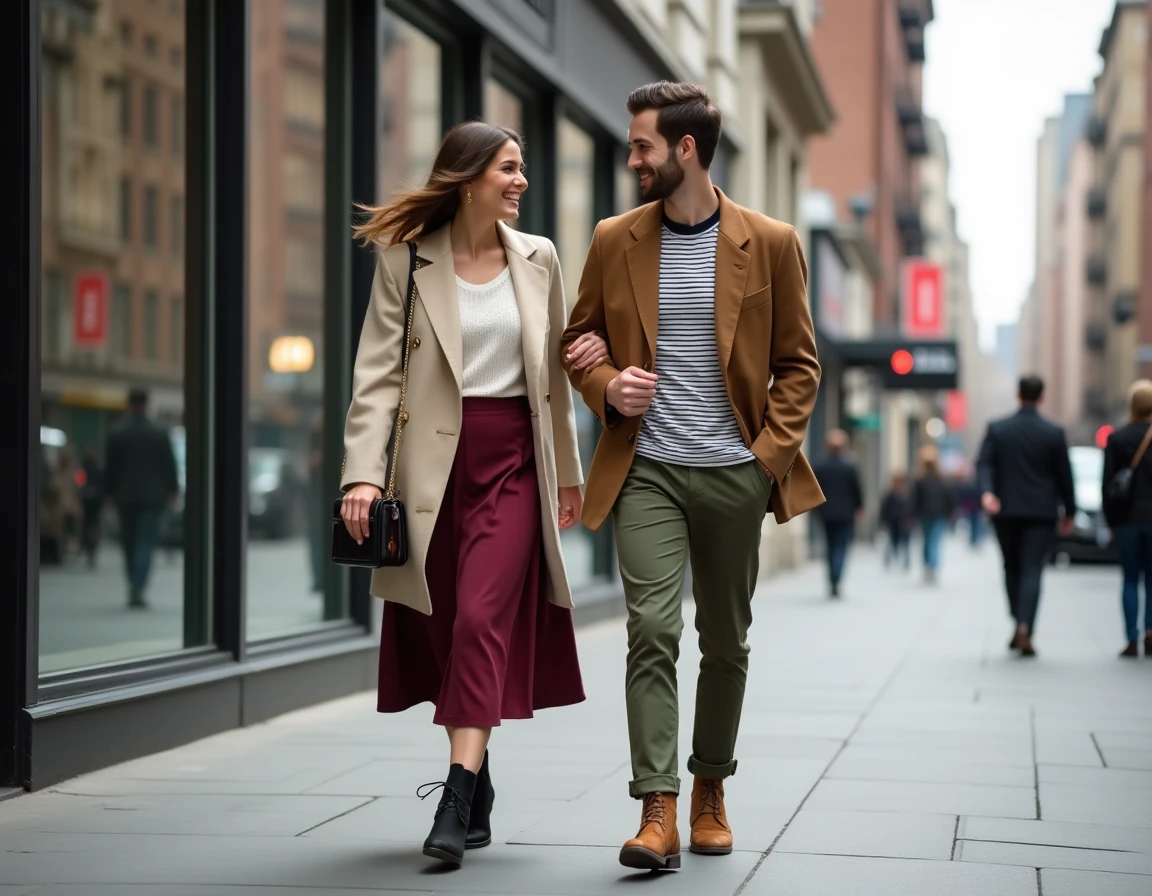
Colors play a central role in this mechanism. A base of neutral tones (navy, heather gray, off-white, black, beige) allows for the integration of a seasonal colored piece without disrupting the overall balance. A warm brown, for example, pairs effortlessly with black, white, or beige.
Second-hand and rental: alternatives for ephemeral trendy pieces
Reports from the Ellen MacArthur Foundation and the European Environment Agency document a marked increase in clothing rental and resale between 2023 and 2025. The pieces involved are precisely those that follow seasonal trends: event dresses, statement coats, designer bags.
This logic is consistent with the seasonless approach. Buying second-hand or renting occasional fashion pieces, while investing in a few durable basics for everyday wear, reduces both impulsive purchases and environmental impact. A statement coat worn three times a year does not need to be bought new.
Building your wardrobe gradually: method and concrete choices
The transition to a streamlined wardrobe does not happen over a weekend. It requires an honest inventory of what is actually worn. The often-cited rule of clothes not worn in a year provides an initial sorting, but it is not sufficient.
The most useful consideration revolves around versatility. Each piece kept or purchased should be able to fit into at least three different outfits. A navy blazer can be worn with jeans, dress pants, or shorts in summer. A pair of loafers works with chinos, jeans, or flannel pants.
- Start with the basics: a pair of jeans, dress pants, two shirts, a blazer, a knit sweater, a coat
- Add a piece of color or texture each season to refresh combinations
- Replace rather than accumulate: when a basic wears out, replace it with an equivalent or higher quality version
A wardrobe of twenty well-chosen pieces produces more outfits than a wardrobe of fifty poorly matched pieces. The constraint fosters creativity in combinations, and each morning requires less decision-making time. Style is not measured by the number of clothes owned, but by the coherence of what one wears.